
Tank Solutions
Underground Tanks
Underground water, diesel and chemical tanks engineered for soil loads, groundwater and safe installation.
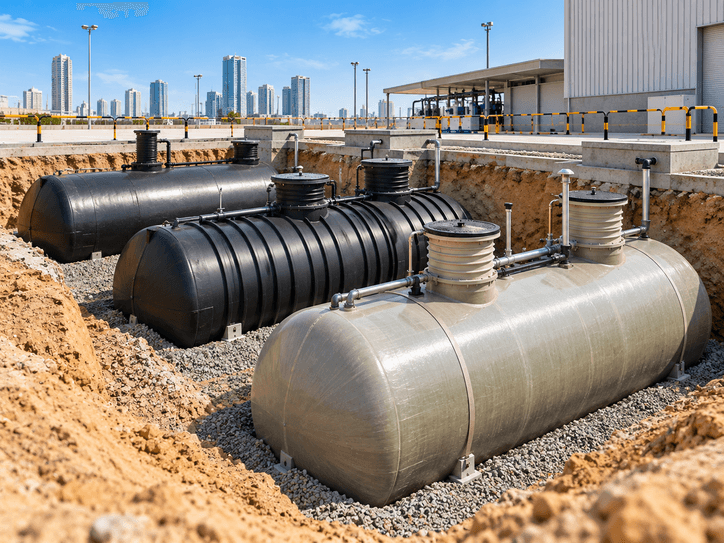
Underground Storage Tanks Engineered for the Ground They Sit In
An underground tank has to resist soil pressure, traffic and groundwater buoyancy as well as the stored liquid. Falcon designs underground tanks in FRP/GRP, polyethylene and steel with the anchoring, foundation and installation details that keep them stable for their service life.
We review depth, soil and groundwater conditions, external loads and access with you before fabrication, so what arrives on site matches the excavation, bedding and backfill plan.
Tank SolutionsWhat We Offer
Buoyancy and anchoring design
Anchoring arrangements to resist groundwater uplift.
Foundation and installation drawings
Bedding, foundation and installation details supplied with the tank.
Underground diesel tanks
Buried fuel storage for generators and industrial sites.
Underground water and wastewater
Corrosion-resistant tanks for buried water and effluent duty.
Chemical-service tanks
Underground tanks with resin and material selected for the chemical.
Restoration of existing tanks
Inspection and restoration where a buried tank is already in service.
Types of Underground Tanks
Each configuration has its own page with the detail relevant to that type.
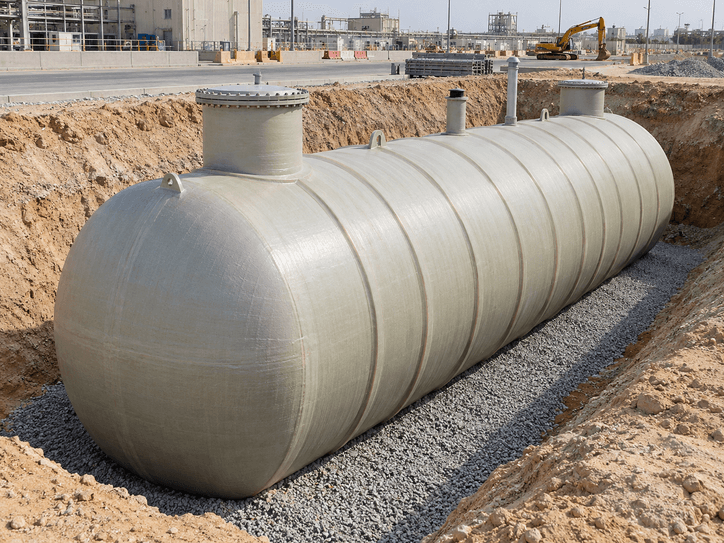
FRP Underground Tank
Corrosion-resistant buried storage, a common choice for underground duty.
View type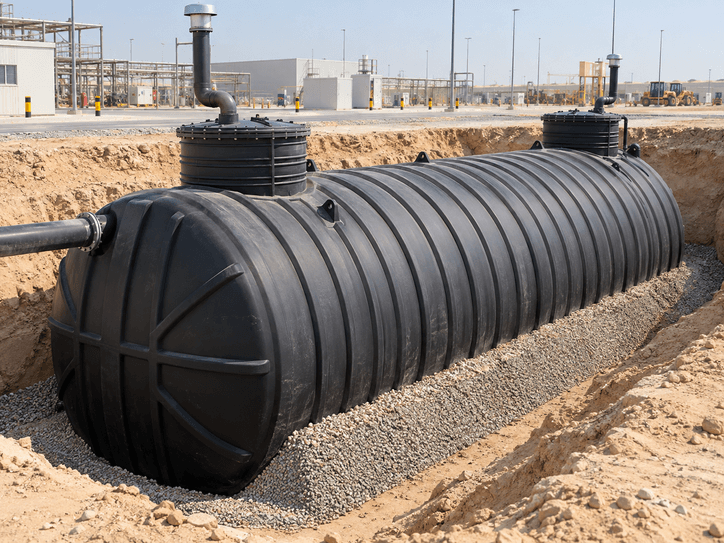
Polyethylene Underground Tank
Buried storage for smaller volumes where polyethylene suits the duty.
View type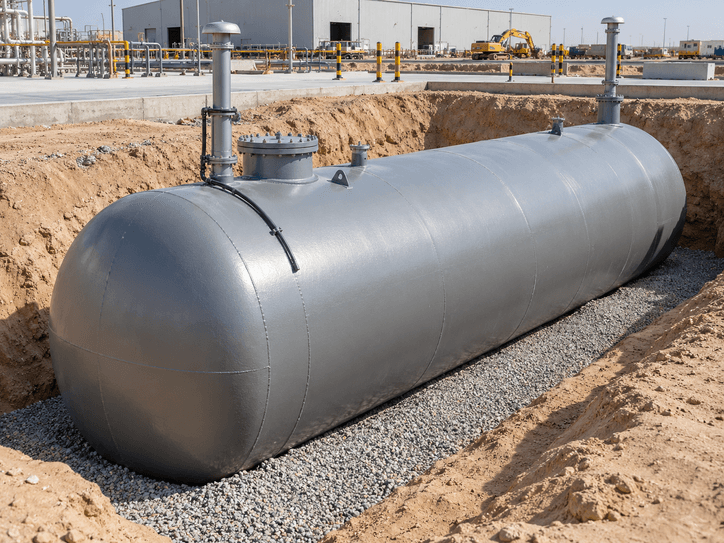
Steel Underground Tank
Buried steel storage, typically coated or lined for corrosion protection.
View typeTechnical Snapshot
- Materials
- FRP/GRP, polyethylene and steel
- Stored liquids
- Water, wastewater, diesel, chemicals and industrial liquids
- Design review
- Burial depth, soil and groundwater conditions, external and traffic loads
- Site details
- Foundation, anchoring, lifting arrangements and installation details
- Access
- Manholes and nozzles positioned for inspection and service
- Shapes
- Horizontal cylindrical, rectangular and custom tanks
Where It’s Used
From Site Review to Installation
- 01
Review site and loads
Depth, soil, groundwater, traffic and access.
- 02
Design anchoring and foundation
Drawings covering anchoring, bedding and lifting.
- 03
Fabricate and inspect
Tank built and inspected to the approved design.
- 04
Support installation
Installation instructions and foundation requirements provided.
Reference Sizes
Documented configurations we can reference as a starting point — confirmed per project, not a committed availability.
- Underground diesel (FRP)
- 20,000 L — Ø2,500 mm × 4,350 mm long; 30,000 L — Ø2,500 mm × 6,400 mm long.
Indicative reference configurations from prior project and design context — not a committed catalogue range or current availability. Final capacity and dimensions are confirmed against the approved drawing and QA file for each project.
These references do not define the capacity range for other underground materials or services.
Standards & Compliance
- UL 1316
- Fibre-reinforced underground tanks for flammable/combustible liquids — confirm the certified model and service.
- UL 58
- Steel underground tanks for flammable/combustible liquids.
- ASTM D1998 (burial note)
- D1998 is scoped to upright rotomolded PE tanks — not a generic PE burial approval; use manufacturer model-specific burial evidence.
A standard reference is not proof of third-party certification. Falcon states “designed and manufactured to” a standard only when it is backed by the controlled design and QA file; chemical, potable-water and underground suitability require separate product-specific evidence. Saudi/GCC approvals (SASO/SABER, Civil Defense, environmental, municipal, utility and owner approvals) are project- and product-specific.
Accessories & Fittings
Nozzle size, material, reinforcement and orientation are set in the nozzle schedule for each tank. Accessories are fitted as the service requires.
Frequently Asked Questions
How do you stop an underground tank floating when groundwater is high?
Tanks are designed with anchoring and foundation details that resist buoyancy. Share ground and groundwater information and our engineers include the anchoring arrangement in the drawings.
Which material is best for an underground tank?
FRP/GRP is a common choice for corrosion resistance, polyethylene suits smaller volumes, and steel is used where specified, with protective coating. We recommend based on liquid, size and ground conditions.
Do you provide installation guidance?
Yes. Installation instructions and foundation requirements are provided with the design, and standard details are also available through our Technical Library.
Ready to Start Your Next Project?
Get in touch with our engineering team for a free consultation and a tailored proposal for your site.