
Tank Solutions
Chemical Tanks
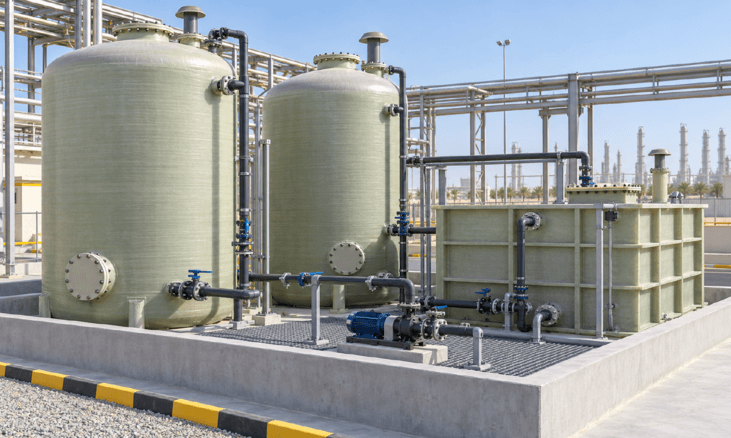
Chemical-resistant storage with construction selected from your exact chemical, concentration and operating conditions — not from the product name.
Chemical Storage Tanks, Matched to the Chemical
No single resin or polymer is universally chemical-resistant, so Falcon keeps one chemical-tank category and selects the construction from the exact chemical and operating conditions rather than implying one tank suits every chemical.
Candidate systems include FRP with a selected resin and corrosion barrier, PE / XLPE, or lined and alloy steel. Compatibility is assessed across the whole system — the shell, vapour space, nozzles, seals, gaskets, vents and cleaning process — because any one of these can be the weak point.
Chemical suitability is service-specific and must be confirmed with written supplier or manufacturer evidence for the exact tank system and duty before any tank is ordered or installed. Prior enquiry records are not compatibility approvals.
Tank SolutionsWhat We Offer
Material recommendation
FRP, PE/XLPE or lined/alloy steel proposed from your exact chemical and operating conditions, not a default.
Full-system compatibility
Compatibility checked across shell, vapour space, nozzles, seals, gaskets, vents and the cleaning process.
Chemical-resistant FRP
Selected resin and corrosion barrier over a structural laminate, with resin family, barrier and cure specified.
PE / XLPE where suitable
Considered where chemical, temperature, density and stress data confirm it, accounting for permeation and stress cracking.
Lined or alloy steel
Qualified internal lining or corrosion-resistant alloy with an inspection and repair plan for welds and fittings.
Compatibility schedule
A documented record of chemical, concentration, temperature, cycles and cleaning that drives the material choice.
Construction Options
Candidate constructions for this category — the right one is selected per project from the service conditions.
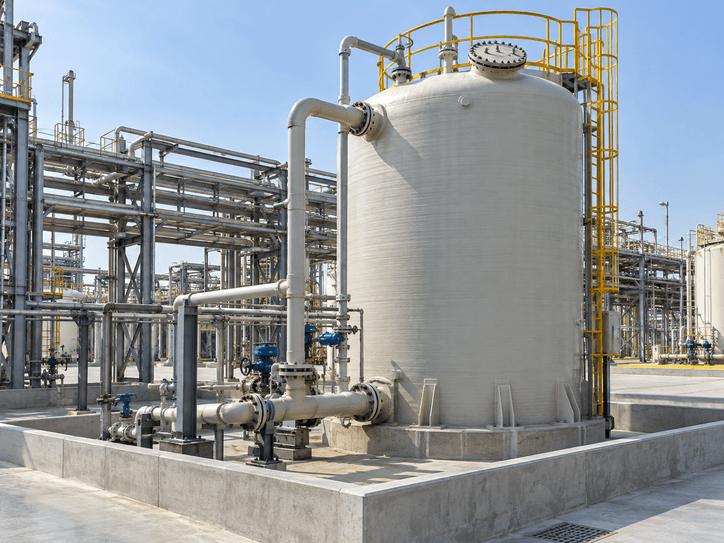
Chemical-resistant FRP
A selected thermoset resin and corrosion barrier over a structural laminate, suited to some chemical duties — resistance depends on concentration, temperature, impurities, vapour exposure and cleaning.
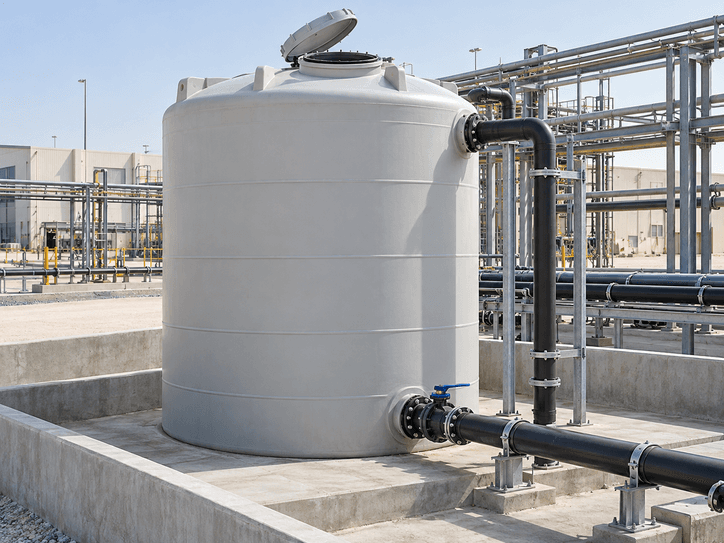
PE / XLPE options
LLDPE / HDPE / XLPE may be candidates only where chemical, temperature, density, stress and tank-model data confirm compatibility, considering permeation, swelling and stress cracking.
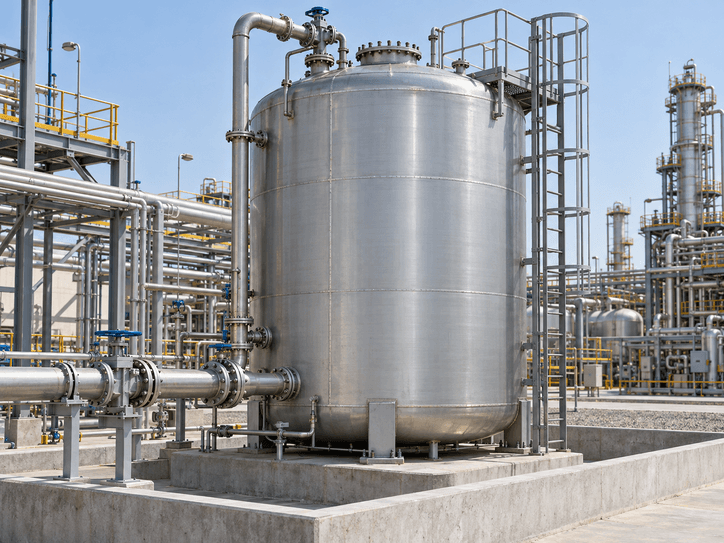
Lined or alloy steel
Steel with a qualified internal lining or a corrosion-resistant alloy for selected duties — the lining, welds, joints, edges and fittings all need compatible materials and an inspection/repair plan.
Compatibility Schedule — What We Review
- Chemical
- Name / CAS, concentration range and impurities
- Temperature
- Continuous and intermittent operating temperature
- Pressure
- Pressure / vacuum and exposure cycle
- Operation
- Agitation, fill/empty rate and cleaning chemicals
- Containment
- Vent handling, design life and secondary containment
- Whole system
- Shell, vapour space, nozzles, seals, gaskets and vents assessed together
Where It’s Used
How We Specify a Chemical Tank
- 01
Collect the duty data
Chemical name/CAS, concentration, temperature, pressure, cycles, cleaning and containment.
- 02
Confirm compatibility
The exact tank system and duty checked against supplier/manufacturer evidence — the whole system, not just the shell.
- 03
Select construction
FRP, PE/XLPE or lined/alloy steel chosen for the confirmed service.
- 04
Fabricate and inspect
Built with material traceability and inspection to the agreed QA plan.
- 05
Document and hand over
Compatibility statements, QA records and maintenance guidance issued at handover.
Sizing
Capacity and suitability are confirmed per project. The resin or material, concentration, temperature and the full compatibility schedule determine the construction before any size is committed.
Standards & Compliance
- ASTM D3299-26
- Filament-wound FRP corrosion-resistant tanks within its scope — does not certify a resin for every chemical.
- ASTM D4097-19
- Contact-molded FRP tanks; the 2019 edition is marked withdrawn by ASTM in 2026 — confirm the current project-approved basis.
A standard reference is not proof of third-party certification. Falcon states “designed and manufactured to” a standard only when it is backed by the controlled design and QA file; chemical, potable-water and underground suitability require separate product-specific evidence. Saudi/GCC approvals (SASO/SABER, Civil Defense, environmental, municipal, utility and owner approvals) are project- and product-specific.
Accessories & Fittings
Nozzle size, material, reinforcement and orientation are set in the nozzle schedule for each tank. Accessories are fitted as the service requires.
Frequently Asked Questions
Which material is best for my chemical?
No single resin or polymer is universally chemical-resistant. The right construction — FRP with a selected resin, PE/XLPE, or lined/alloy steel — is chosen from your exact chemical, concentration, temperature and operating conditions, confirmed against supplier evidence.
Why do you need so much detail about the chemical?
Resistance depends on concentration, temperature, impurities, vapour exposure and cleaning — and on every wetted part, not just the shell. The nozzles, seals, gaskets and vents are assessed too, since any one can be the weak point.
Can you confirm suitability from the chemical name alone?
No. Suitability is service-specific and is only stated once the exact tank system and duty have written supplier or manufacturer confirmation. A chemical name or a past enquiry is not a compatibility approval.
Do you provide a compatibility record?
Yes — a compatibility schedule capturing the chemical, concentration, temperature, cycles, cleaning and containment is documented and drives the material selection.
Ready to Start Your Next Project?
Get in touch with our engineering team for a free consultation and a tailored proposal for your site.